

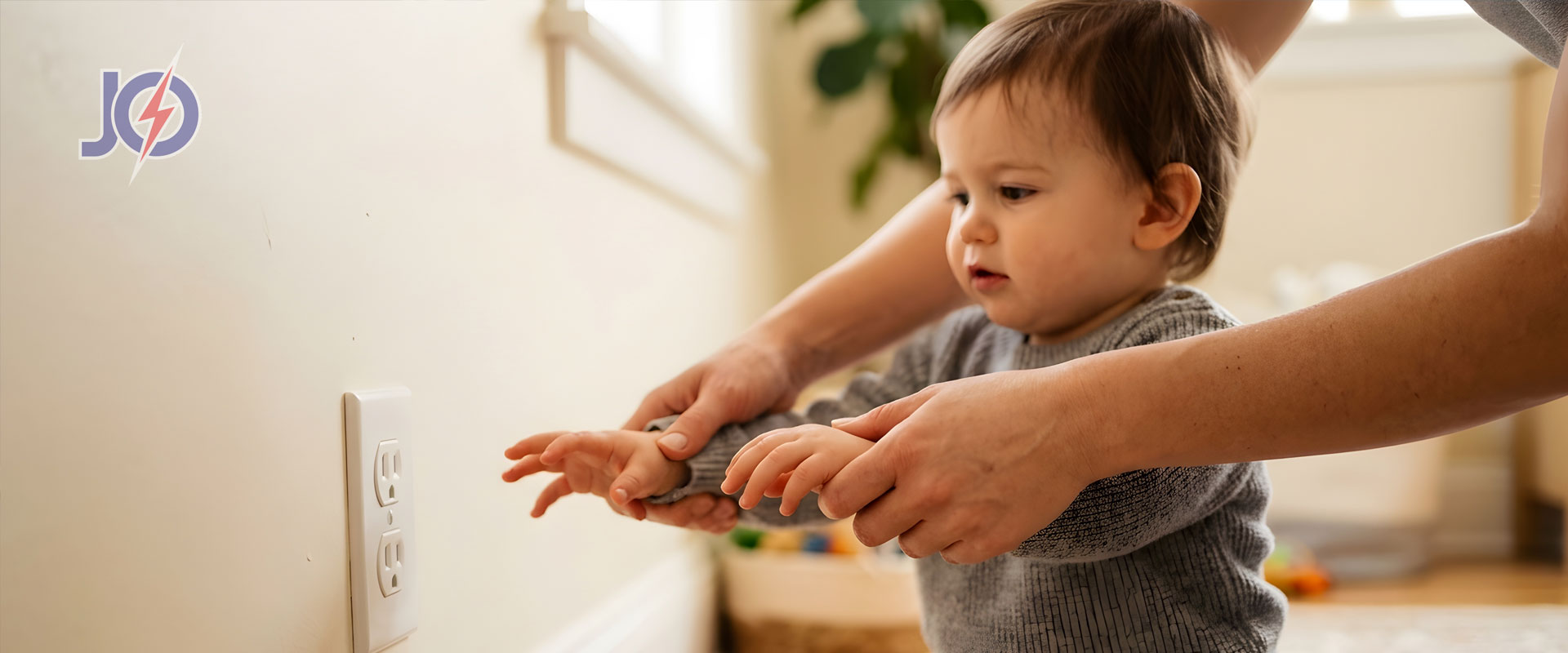
Creating a safe home environment is a priority for families with young children, and electrical safety should be part of that planning. From power points to appliances and extension cords, everyday household electrical items can pose risks if proper precautions aren’t taken.
For families across Brisbane, Logan, Bayside, Redlands, and surrounding suburbs, childproofing electrical outlets and appliances is a practical step that can help reduce hazards and improve peace of mind.
Here are some important electrical safety measures every household should consider.
Why Electrical Childproofing Matters
Young children are naturally curious. They may touch, pull, climb, or insert objects into places they shouldn’t, including electrical outlets.
Common household risks can include:
- Access to exposed power points
- Loose appliance cords
- Overloaded power boards
- Damaged outlets or plugs
- Unsafe access to kitchen appliances
Taking simple preventative steps can help reduce the risk of electric shock and other accidents.
1. Use Safety Covers for Unused Power Points
One of the simplest ways to childproof outlets is by using approved power point safety covers.
These covers help prevent children from inserting fingers or objects into unused outlets.
They can be particularly useful in:
- Living rooms
- Bedrooms
- Hallways
- Play areas
If you have older or damaged outlets, replacement may be a safer option than relying only on covers.
You can learn more about electrical safety services here:
2. Keep Appliance Cords Out of Reach
Children may pull on dangling appliance cords, which can lead to injury or damage.
To reduce risk:
- Keep cords away from bench edges
- Avoid leaving chargers plugged in unnecessarily
- Use cord organisers where appropriate
- Position appliances well out of reach
This is especially important in kitchens and laundries.
3. Avoid Overloading Power Boards
Power boards can become hazardous if overloaded or left accessible to children.
Best practices include:
- Avoid plugging too many devices into one board
- Keep power boards off the floor when possible
- Use boards with built-in overload protection
- Prevent children from accessing switches or plugs
Where multiple devices are used regularly, installing extra power points may be a safer long-term solution.
4. Check for Damaged or Loose Power Points
Worn or damaged outlets can present additional risks.
Watch for signs such as:
- Loose plugs
- Cracked outlet covers
- Discolouration or burn marks
- Buzzing sounds
These issues should be inspected promptly by a licensed electrician.
5. Secure Heavy or High-Risk Appliances
Some household appliances should be positioned or secured to prevent accidental access.
Pay extra attention to:
- Kettles and toasters
- Heaters
- Lamps
- Fans
- Charging stations
Avoid leaving small appliances plugged in when not in use.
6. Consider Safety Switch Protection
Safety switches (RCDs) help protect against electric shock by cutting power quickly when a fault occurs.
If you live in an older home and aren’t sure whether your switchboard has adequate RCD protection, an inspection may be worthwhile.
Safety switches add an important layer of protection for households with young children.
7. Childproof Outdoor Electrical Areas
Outdoor spaces can sometimes be overlooked.
Check that:
- Outdoor power points have weatherproof covers
- Pool equipment is secured
- Garden lighting wiring is protected
- Extension leads aren’t left accessible outdoors
This is particularly important in Brisbane homes with large outdoor living areas.
8. Teach Basic Electrical Safety as Children Grow
Physical childproofing is important, but teaching simple safety habits can help too.
Children can gradually learn:
- Not to touch outlets
- Not to pull cords
- Not to use appliances unsupervised
Age-appropriate awareness supports long-term safety.
When to Consider a Professional Safety Inspection
If your home is older, you’re renovating, or you’re unsure about the condition of your electrical fittings, a professional inspection can identify risks you may not notice.
A licensed electrician can check:
- Power points
- Switchboard safety
- Wiring condition
- RCD protection
- General electrical hazards
This can be especially useful for growing families.
👉 Book an electrical safety inspection:
Contact Jo Electrical Works
📞 Call us: 0405 305 068
📧 Email: info@joelectricalworks.com.au
🌐 Visit: www.joelectricalworks.com.au
Childproofing electrical outlets and appliances is a simple but important step in making your home safer for young children.